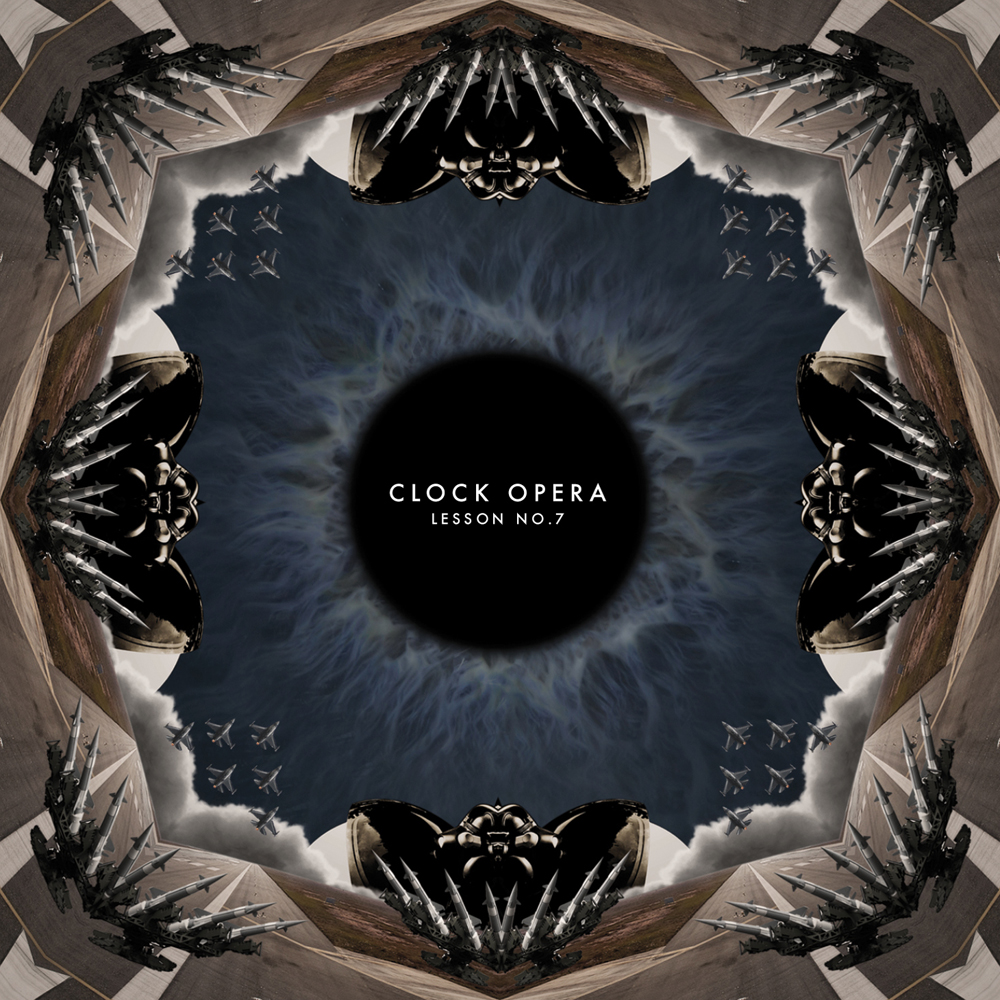
 Track: Lesson No.7
Artist: Clock Opera
Genre: Indie rock
Release: 3rd October 2011
Music Video Director: Aoife McArdell
Clock Opera are an indie rock band based in London. They were formed in 2009 by singer, guitarist and sampler Guy Connelly, the band members are as follows; Andy West on bass and guitar, Che Albrighton on drums and Dan Armstrong on keyboard and vocals. Although they are labelled as indie rock, their music seems to contain some elements of electro; used euphorically like bands such as Metronomy, whilst they additional operate in similar vein to Coldplay.
Music videos demonstrate genre characteristics:
A common characteristic of English indie-rock is to establish the Britishness within the music video, an example would be the use of a council estate as a primary location in the music video for "The View From The Afternoon"- Arctic Monkeys. This is as is council housing is primarily situated within the UK, and is easily signified by tower blocks often showing signs of urban decay. Furthermore, Aoife McArdell establishes British society through the use of council estates as a location, much like in "A View From The Afternoon". Additionally, BBC news footage is used as another establishment used to characterise the genre through the indication of Britishness, as well as injecting the video with an authentic, documentary type style.
On the other hand, "Lesson No. 7" seems to be contradictory of a common indie-rock characteristic; this is the lack of incorporation of the band playing the track within the music video. Furthermore, it is common to cut to shots of the band whilst they are playing their instruments even if it is in between narrative or perhaps experimentally done. An example would be the music video for "Song 2" - Blur, whereby flashing lights, wind generators and stunt ropes are used within the performance of the band to convey a sense of the powerful riffs and drum beats. However, "Lesson No. 7" relies purely on narrative and doesn't feature and band performance, giving a slight contradiction to Goodwin's theory relating to genre conventions.

Furthermore, as indie-rock is a genre that progresses from the stand alone rock genre, we can associate some of these genre characteristics to "Lesson No . 7"; rock draws affiliation with rebellion and political activism. An example of rock rebellion would be bands smashing up their instruments at the end of their gigs. In relation to "Lesson No. 7", it appears Aofie McArdell has illustrated and modernised this classic characteristic of rock stage performance within his music video for Clock Opera. The way in which we see the protagonist smash up the car within the video draws a divine similarity to how performers such as Pete Townshend smashed up their guitars, particularly with the car resembling an amp. Moreover, perhaps illustrating how violence in rock has progressed from a stage of entertainment to genuine destruction. In addition, and as mentioned before the rock genre also draws association with political activism; songs such as "Fortunate Son" by Creedence Clearwater Revival criticise jingoism and supporters of the use of military force who don't have to face the consequences of it, particularly relevant as of it's release during The Vietnam War. This therefore showing how rock music is a symbolism of protest against larger world issues i.e. War. Furthermore, "Lesson No. 7" relates to this in the way that it deals with issues that are specifically relatable to Britain i.e. The riots influence on youth crime; therefore, the music video could perhaps be illustrating the significance of genre on how issues are dealt with e.g. Rock = larger world issues, indie-rock = locally significant issues. Moreover, this is supported by the term independent that is used to describe this sub-genre of rock, meaning that bands of this caliber aren't supported or influenced enough by any big record labels to make protest against larger mediums, instead going for smaller and more relatable topics to base their lyrics on. Overall, this shows how "Lesson No. 7" demonstrates genre characteristics of indie-rock through illustration and in some places contradiction via the music video.
There is a link between lyrics and visuals (either illustrative, amplifying, contradicting).


Using Goodwin's music video analysis of the connection between lyrics and visuals, it seems that the video for "Lesson No.7" is mainly illustrative and sometimes amplifying of Clock Opera's lyrics. Firstly, after being introduced to the protagonist there is a high angle shot of a group of five adolescents (wearing tracksuits and smoking), this then cuts to a mid-shot of the protagonist looking down at them through a wire fence; the lyrics that accompany this sequence are "You're crouched like a hunter, seconds from a kill". Moreover, use of camera angles and editing compare the protagonist to a hunter; a being that gains powerful advantage over naive creatures by stalking its prey, the prey in this case being the adolescents in the car park. Therefore, the visuals are illustrating the lyrics by using the protagonist as a metaphor for the hunter, ready to strike upon the group within the car park. Additionally, the fact that the protagonist is grasping the wire fence as he looks down upon the gang shows that his moves are restricted, as if he is unable to take action against them yet.
Furthermore, the second line of lyrics is "You're still an empty vessel, impossible to fill"; interestingly enough, in behavioural psychology, "empty vessel" is a term describing how an individual ends up with worthless outcomes when they are trying to please everyone. This links in with the Goodwin's theory about the amplification of lyrics, as, it essentially foreshadows the latter part of the music video; whereby, the protagonists actions don't solve anything but instead create more of the same violence.
Moving on, the video continues to illustrate the lyrics in a rather metaphorical way that can only really be understood once the context behind the video is known; "Lesson No. 7" uses the London riots as a backdrop to showcase the disturbing, anarchic shift in our society. Getting back to the point, the lyrics at the end of the first verse go on to say "One foot in the future, one foot in the past, shitting on the present, as you're lashed to the mast". In contrast, the visuals cut from a low- angle shot of a women shouting at the gang, to a medium close-up of one of the gang members as he tussles with the others and eventually to the protagonist drinking some milk from the fridge. Interestingly, the cuts in this sequence are made between "future", "past" and "present" within the lyrics, giving each shot significant meaning. Firstly, we see an older women shouting at the gang from above as the lyrics talk about "future", signifying that the younger generation need to be better disciplined in the future in order to prevent outbreaks of misbehaviour and violence, such as the London riots. Secondly, when "past" is highlighted in the lyrics, the gang tussle that is being visualised is an indicator of how these young adolescents still feel that they are in control because of that previous event; they're stuck in a moment of past action that is yet to be broken. Finally, the symbolism of the protagonist drinking milk whilst we hear "shitting on the present" is that we aren't doing anything to take action against our broken society, we're wasting time by not making things right, only allowing matters to get worse.

 |
| This shot could be illustrative of how his stronger more aggressive side is seen as another part of him, using shadows to portray this side of the protagonist as dark. |

 |
| POV shot from protagonists view; shaky movement, spit on the camera and a taunting gang member. |
 Secondly, the lyrics and visuals firmly link in order to show how the protagonist's modification of identity enhances his mental and physical persona. For example, the lyric "strong" is accompanied by a medium close-up of the protagonist in a mask pulling out a weapon (baseball bat); the drawing of the weapon comes exactly on this lyric, as well as the first shot of him in the properly secured mask. Therefore, indicating to us how the character feels stronger through using a mask to modify his identity; it's giving him the power to fight back as he can't be seen as the individual responsible. In contrast, when the first chorus is heard the protagonists movements are synched with the word "weak", showing the progression this mask gives him in terms of releasing his true emotions towards the gang. (perhaps this could be a metaphor for our society, would we fight back if our identity was hidden?) Nevertheless, this particular example is very illustrative of Goodwin's theory, literally pointing out to us the characters physical and emotional strength as the track advances.
Moving on, the next verse portrays a rather weak link between lyrics and visuals, however it is still an illustrative link at that; "Every part of the heartbeat is the closing of the door, to keep the blood flowing, it can't come back anymore, hear the people calling, calling out for you, but it's just your head they're ever after, and they want it cold and blue. In context to the video, these lyrics seem to connote the idea that however pleasurable the high one gets from rebelling and reacting to the circumstance (i.e. the gang), ultimately this is short lived, and in the long run just creates more of the same (i.e. gang violence). In terms of the visuals during this sequence, we see cuts between close-ups of the protagonist in the car, tracking shots of natural greenland and a medium close-up of the cars rear-view mirror, reflecting the protagonist taking his mask off.

 The third and final chorus of the song seems to link the protagonist to his most violent stage of growth, this being the physical assault of other human beings. Furthermore, this final link of lyrics confirms to us that each chorus is a sign of character progression and growth, seen within visuals. Moreover, the line "belief and seeing are both often wrong" is a particularly strong link between all three; in the first chorus the protagonist has only seen how gangs have had an effect on society, via the news and observing them out of his window. Secondly, the protagonist actually experiences gang torment through simply walking past them; finally, we see him actually tormenting other individuals himself. Therefore, showing how McArdell has created a progressive relationship between lyrics and visuals within the tracks chorus'; firstly illustrative, then amplifying and finally contradicting. The reason the last is contradicting is that it places the protagonist as the wrongdoer, instead of allowing his actions to follow based on justified sights or experience.
There is a relationship between music and visuals (either illustrative, amplifying, contradicting).
Relationships between the music and visuals within "Lesson No. 7" seem to follow a mainly illustrative pattern; cutting between shots follows the general pace of the instruments, as well as their changing chords and patterns. For example, the beginning of the song features a guitar as the only instrument played during the first verse and chorus; as a result, this allows for prolonged shots to begin the music video replicating the slow place set by the introductory guitar. Furthermore, the guitar switches between two primary notes and this creates cutting points upon the change between chords, the music video abides by this through the use of these points to switch between various shots whilst maintaing a steady montage. Additionally, when a rather reluctant bass drum pattern in introduced during the first chorus we see an amplification of the visuals via the music. For example, with every beat we see a rather strong character movement, such as the protagonist getting up from his sofa on the 3rd beat of the drum.
Moving on, the introduction of the consistent open high hat and heavier guitar rift are allowing the track to begin it's build up to the first climatic point of the song (and video); this is again illustrated by the editing, movement and shot variety within the visuals. For example, we see the protagonist walking along the bridge cut together with a variety of angles and different shots of the environment, all quickly shifting in-between each other in order to notify the tracks building pace. Additionally, the protagonist's movements become more active and energetic i.e. punching, which also informs the progressing tempo.
The track then reaches it's first climatic point, creating a more "manic" montage of visuals formed through editing; seemingly portraying an illustration of release from the songs build up, as well as an amplification of the newly introduced heavy drum rhythms. For example, cuts between the protagonist's bat making contact with the car are edited together franticly, in a montage that could be seen as a continuous sequence of jump cuts, illustrating the powerful guitar riffs and drum patterns. In addition, the hits of the bat match up with some of the drum strikes, giving a great amplification of the percussion via the smashing car windows. Moreover, as this first climatic point ends, shots begin to become more prolonged and there is less variety between the different shot types used.
Again, as the track builds up again and reaches it's climatic point we see the same pattern emerge within the editing and movement of the visuals as before. The shots types become more varied, cuts begin to quicken with the pace of the song and interestingly enough the violent punches thrown by the protagonist are again an amplification of the drum hits. Overall, "Lesson No. 7" links to Goodwin's ideas about the relationship between music and visuals in an illustrative way yet again, and at some points an amplification of the track.
The demands of the record label will include the need for lots of close ups of the artist and the artist may develop motifs which recur across their work (a visual style).
Clock Opera are a band that don't often feature in their own music videos, and so I would say that Goodwin's point about close-ups of the artist as a requirement of the record label isn't entirely applicable to their music videos. However, "Lesson No. 7" is a great example of the unique visual style that recurs across Clock Opera's music videography. This is as Clock Opera produce music videos that are more suited to being short films, they focus on telling a story and addressing a wider point to the audience; illustrating this narrative also via the use of rather masterful cinematography in order to give visually aesthetic appeal as well. For example, "Lesson No. 7" is in essence a short film that illustrates how trying to fight fire with fire can end up with worthless outcomes, and that some people can't be taught. Moreover, the track itself acts as a soundtrack to this short film, eliminating the need for dialogue as the film is explained in the lyrics; this seems to be a motif that has developed throughout Clock Opera's music videos. However, "Lesson No.7" is also an example of how Clock Opera don't abide by genre characteristics, the music video doesn't feature any band members or cuts to stage performance. The reason for this may be that, independent record labels are more focused upon allowing bands to stand out through having a more unique style amongst their music videos as means of getting notability from a wider audience. For example, the impressive cinematography may appeal to filmmakers or photographers, who perhaps come to appreciate the music through the video itself. On the other hand, if the record label set out to abide by genre specific characteristics in Clock Opera's music videos they may gain less recognition as stage performance and artist close-ups are featured in such a wide variety of other music videos that it perhaps becomes a bit monotonous.
There is frequently reference to notion of looking (screens within screens, telescopes, etc) and particularly voyeuristic treatment of the female body.
 Again, "Lesson No. 7" doesn't abide by Goodwin's theory entirely; there is not any real sense of voyeuristic treatment throughout the entirety of the music video. However, there are strong links to the frequent reference of notion of looking, this is a point that is vicariously reinforced throughout the cinematography of the video. For example, the first shot of the music video features the protagonist staring out of his window in a rather prolonged shot; reflections of the tower blocks can be seen overlaying him in a sort of natural double exposure, he is also depicted on the other side of a curtain and so his features are partially blurred. Moreover, referencing the notion of looking as we are not only viewing the character looking out, but are able to make out what he is looking at through use of reflections.
Interestingly enough, there is a shot at 1:40 within the video again using windows to reflect the council estate whilst a couple are shouting at the protagonist; this gives me the impression that shots capturing disillusioned expressions of the protagonist and the rowdiness of the couple were set up so that reflections could be utilised, as a way of metaphorically mirroring the stereotypical characteristics of life on a council estate. Additionally, these shots seem to be influenced and portray essence of Lee Friedlander's photography; Friedlander consistently used reflections in order to capture ironic portrayals of America, this style of photography became widely recognised as capturing the"social landscape". In this sense, Aoife McArdell has utilised reflections in this style to represent Britain's social and urban landscape, homaging Friedlander's ideas and techniques. Ultimately, linking back to Goodwin's notion of looking through reflections as a sort of screen within a screen.
 |
| "Mount Rushmore, South Dakota", 1969 - Lee Friedlander. Friedlander's depiction of tourism in America, utilised via reflections of this famous American monument. |

Additionally, the majority of shots where the protagonist is frequently referenced to looking seem to include transparent or in one case, opaque barriers between us and the protagonist. For example, the first shot contains a curtain in front of the protagonist, a latter the notion of him looking through and grappling a wire fence, frequent featuring of windows and shots including the protagonist referenced gazing in a mask. This could be conveying how the protagonist is distant or at least distancing himself from the world around him, it is as if he is constantly fearing letting his world and the outside society collide. However, theres something in him that wants to take action and this is where the mask comes in to play; he seems to go out in order to try to make the world around him a place that he doesn't need to restrict himself from, the use of the mask may be to diminish himself from the broken society and others whilst he is out there. Therefore, these barriers are perhaps used to represent the protagonist's fear, as a sort of metaphorical defence mechanism to represent the characters own armour against society.
Furthermore, Goodwin's theory is again referenced at 0:48 and 4:00, whereby mirrors are used in order to capture the protagonist. These shots also seem to link in with each other, and they give us an understanding of how the protagonist see's himself at two different stages; the first mirrored shot depicts the character slouching and smoking on a sofa, where as in the second we see him taking of his mask in the car. Therefore, showing how he has evolved from seeing himself as a rather restricted and pathetic individual to him removing his mask and embracing the world for what it is. Moreover, this change could be explained through Mikhail Bakhtin's view on identity; whereby, the self is un-finalised and identity progresses dependently on who and what is encountered.

 Finally, the notion of screens within screens is again referenced at 2:50 when the protagonist gives his camera to a child character and instructs him to film the car being smashed up. This makes an interesting link to a previous shot, whereby, the protagonist is watching a news report and footage of the London Riots is played; it's as if he's trying to make the point that he's watched the destruction caused by individuals like the gang in the video and so now they should watch his. However, it could also be illustrating the idea that the protagonist is no better than the rioters, this is by showing him behind the screen as a comparison point to the rioters behind the screen within the news footage. Ultimately, reference to looking is an idea that is very strongly depicted in "Lesson No.7", linking the music video to Goodwin's theory quite succinctly.
There are often intertextual references (to Films, TV programmes, other music videos).
 The themes and aesthetic of "Lesson No. 7" create strong intertextual links to the novel "A Clockwork
Orange", as well as the film. Firstly, the author of the novel (Anthony Burgess), was partially inspired to write the novel after returning to Britain after a rather long period of travelling. On return, he observed a horrible rise in youth violence and a change in culture that he found rather despicable i.e. the introduction of tower blocks as means of council housing, as well as the rapid shift in fashion and trends. Therefore, he wanted to portray this in a futuristic manner as a way of showing where we would end up if things remained to change in the way they were at that time. This is referenced in the music video through the similar themes of rise in youth violence, the characteristics of tower blocks and the notion of acting on a problem that only creates a worse outcome. In addition to this, the film is referenced via the constant establishment of the decrepitly bland and unsightly tower blocks, which are the homes to both the gang in the video as well as Alex and his "droogs" from "A Clockwork Orange". This link could have been made to illustrate how Anthony Burgess wasn't far off with his predications of the future, showcasing the gang activity that these council estates encourage. Interestingly enough, "Lesson No. 7" and "A Clockwork Orange" were also filmed on the same estate (Thamesmead) which gives even more reason to draw links between the two.
 |
| Shots from "A Clockwork Orange" (left) and "Lesson No. 7" (right), showcasing the same location i.e. Thamesmead estate. |
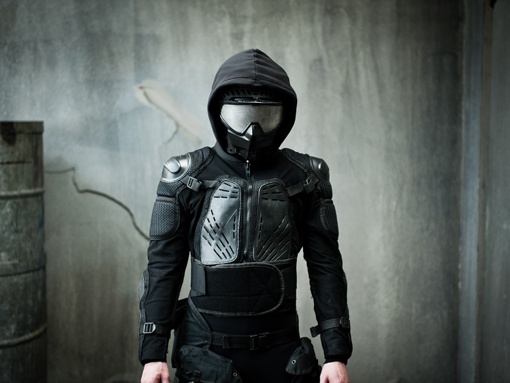 |
| The character of Simon or "Superhoodie", in "Misfits". |
 |
| Still from "Stress" (top), influenced still from "Lesson No. 7" (below). |
Consequently, the above indicates how "Lesson No. 7" links closely to Goodwin's theory with a wide variety of characteristics fitting in with his points about music video analysis. Additionally, "Lesson No. 7" is rich with intertextuality, again presenting it with an even stronger link to Goodwin. However, there are a few parts that don't link to this music video, such as voyeuristic treatment of the female body and demands for close-ups of the artists by the record label.

At the highest level. Adam your case study is detailed, well organised and articulate. You consistently support your points with a wide selection of examples from other music videos and films.
ReplyDeleteNote the strongest inter textual references are to feature films/TV dramas because the music video is in reality a short very dark film focusing on the underclass on urban estates. The film "Fish Tank" would be worth watching except in this case it deals with a girl who has similar issues to the protagonist/I assume lead singer in the music video.
if you want to add another post this music video seems be fuelled by a nihilist ideology.
..... Nihilism is the belief that all values are baseless and that nothing can be known or communicated. It is often associated with extreme pessimism and a radical skepticism that condemns existence. A true nihilist would believe in nothing, have no loyalties, and no purpose other than, perhaps, an impulse to destroy. ..Wikipedia.
Dostoevsky's "Crime and Punishment" explored this ideology through the character of a penniless ex student Raskolnikov who feels justified in murdering a pawn broker for her money.
A fantastic novel, I read it ;in my late teens but never forgotten its impact.
Nietzsche was a famous nihilist/anarchist!
You may have come across the writer Dostoevsky and the philosopher Nietzsche in other subjects. Nietzsche's beliefs are certainly relevant to the music video.
A really great analysis! Been about 3-4 years since i watched this music video as a then 14-15 year old, and I never quite understood it.
ReplyDeleteThis blogpost cleared a lot of things up. Thank you so much