Thursday, 12 December 2013

Costume and Props

For the character of the business man, we wanted to use a costume that was stereotypical, simple, yet bold and powerful. Therefore, we decided on a choice of an all black suit, smart shoes and a red tie; the combination is rather generic of the modern business man and it therefore gives strong hints to the characters profession without actually revealing his occupation. Additionally, the neatly fitting suit in the rather dull black colour gives the idea of someone who is uptight and rather controlling.

However, the vibrant and rather overpowering red

Patrick Bateman, "American Psycho"
tie symbolizes power, danger and determination, we purposely chose this accessory for these connotations in order to give this character a bold and impressionable presence within the video. Furthermore, our choice for this piece of costume was inspired other media texts; the main film being "American Psycho", in particular the character of Patrick Bateman. Bateman (as well as his peers) is a Wall Street investor that leads a double life as a serial killer, his urges to kill get stronger as the film goes on and we see him begin to break down as the narrative advances. The world he lives in is so obsessed with self-image and consumerism that no-one can put faces to names anymore and they can't recognise Bateman as a killer even once he admits it. Moreover, this same idea about how society has become so self-obsessed that it can't realise the truth of whats going on in the world is one that we have tried to replicate through intertextually linking our music video and "American Psycho", the same can be said for the track as well.


Agent 47, "Hitman"
Additionally, the black suit and red tie combination also reference Agent 47 from the film and game series "Hitman", this is his signature outfit and we again referenced this to strengthen the connotations of our character. Agent 47 is a cold, emotionless and rather blunt character, also powerful and dangerous; these attributes are similar to those of Patrick Bateman from "American Psycho" and ultimately the character in our music video, furthermore, illustrating how this suit and tie combination can be linked back to personality traits similar to those high up in the corporate world as well as killers.


In terms of props for the business man, firstly we have depicted him reading and holding The Daily Mail in a few scenes. This is as The Daily Mail is regarded as a heavily conservative newspaper and so we decided that it be appropriately linked to the character we were trying to create, due to the ideas this persona is likely to posses.


In addition, we decided to include a briefcase for some of the video; this gives the idea that the business man character is involved with the corporate world, giving the impression that he is carrying statistical documents vital to say, a banking company. However, there is no real telling what is actually in the briefcase and so it appears to be rather enigmatic within the narrative. This could be seen as a reference to "Pulp Fiction", whereby, the audience never see what the contents are but are only left to assume.

Jules showing the contents of the briefcase, unseen to the camera, "Pulp Fiction".


In contrast to the business man, we wanted the protestors costume to be in expensive and bland; we went for a plain white t-shirt, a pair of old jeans and some trainers. The reason behind this choice is, we wanted to communicate the idea that the protestor character isn't wealthy and also isn't obsessed with consumerism (a contrast from the connotations of the business man's dress). Additionally, the clothes are casual and rather loose fitting symbolising a more open minded and less aggressive character, one who understands he needs his say in regards to the countries' political and economic status, but doesn't go about it in ruthless or violent fashion. Essentially, he is a representation for the 99% of our nation, whereas, the business men represent the 1%.

In terms of props for the protestor, we had one scene where he is holding a sign that reads "We're In Trouble". This sign, particularly the fact that it's homemade, can be instantly associated with protest and so we are able to establish the occupation of the character through this.


Additionally, the particular wording on the sign is part of the track's title (we decided not to include "Mr President" as it doesn't really relate to the UK), the reason we used this was partly to promote the name of the track in the video but also to communicate a message about society; "We're In Trouble" gives the idea that although the majority (99%) should be the power in the country, ridding corruption, the minority (1%) is overpowering purely on a monetary basis. Therefore, we're in trouble as the system doesn't work and is not equal to everyone.                              

Monday, 9 December 2013

MGMT - "Cool Song No. 2" (Genre theory)

Track: Cool Song No. 2
Artist: MGMT
Genre: Synthpop, Psychedelic/ indie-rock
Release: 17th September 2013

Music Video Director: Isaiah Seret


MGMT are an American psychedelic rock band, founded by Benjamin Goldwasser and Andrew VanWyngarden in 2002. The other band members are as follows; Matthew Asti (bass), James Richardson (drums) and Hank Sullivant (guitar).


The opening of "Cool Song No. 2" amplifies the track and therefore uses aspects of the psychedelic rock genre; this is is as the light reflections in the protagonist's glasses create a rather vivid pattern as the camera tracks back from him walking. Psychedelic rock is influenced and inspired by the effects of mind-altering drugs, attempting to replicate the experience of this through the music; therefore, this is amplifying the music and genre within the music video as the glasses are mimicking "trippy" effects someone on a drug like acid may see.

Still from "Leon".
This shot also creates an intertextual reference to the film "Leon", the costume and aspects of mise-en-scene (such as reflections in glasses) both cement a heavy link, supporting Katie Wales' theory about genre as an intertextual concept, referencing "Leon" allows us to better understand the narrative of the music video; however, I will expand upon how later in my analysis. Additionally, being introduced to the protagonist at a low-angle shot instantly associates the character with power, allowing conclusions to be drawn about the character right from the beginning.

The psychedelic genre is again referenced at 00:08, the use of strobe lighting in the background of a tracking shot is illustrative again of this genre. This is as strobe lighting is popular within psychedelic music videos as it as an aspect, that yet again aims to induce the same mesmerising effects of drugs such as LSD and acid. Moreover, relating to Nicholas Abercrombie's idea that genres permit the creation and maintenance of a loyal audience which becomes used to seeing programmes within a genre; this is as loyal audiences of psychedelic genres tend to occasionally take recreational drugs, therefore, the video aims to maintain this sensation through factors such as strobe lights to induce psychedelic effects.


At 00:12, the protagonist is seen driving in very low-key lighting, reflecting from his car, this appears to reference the neo-noir genre; the chiaroscuro lighting combined with the modern vehicle emitting a blue tint connote progressive twists on the classic noir genre. Therefore, abiding by Jaques Derrida's ideas that a text cannot belong to no genre, but instead to one or many, in the case of this music video so far, psychedelic and neo-noir. In addition, the shot used seems to intertextually reference "Drive", a neo-noir crime film directed by Nicholas Winding Refn through similar shot type, lightning and action; further supporting the idea that the music video also belongs to the neo-noir genre.

  Furthermore, the lyrics and mise-en-scene around this sequence is very reflective of genre. For example, the lyrics are "Whenever I drift by the unknown, feign like I notice a fundamental tone, the fine petals open and close offended, poor explanation and nothing shown". These lyrics describe being on drugs in order to enter a consciousness that allows for insight in to true reality, however, despite best effort this desired insight is not received. Therefore, relating to the origins of the psychedelic rock genre; in the early
1960's, LSD and other hallucinogens were recommended by well-known philosophers and psychologists in their writings as a means of conscious expansion. In turn, influencing musicians to take hallucinogens in order to allow for better creativity and insertion of true depth to their music.

Additionally, the meaning of these lyrics also allows it to be reflective of the music video; the protagonist uses violence as a means of relinquishing himself from the emotions he feels (such as anger and sadness), but these feelings are on-going and never resolved. This is indicated by the cuts between brutal violence and scenes of remorseful, unguided staring in to the distance.

This idea is also represented through colour, the tint used within this sequence is a mixture between red and pink, it's hard to properly perceive the correct colour. The confusion over the dominating colour could be representative of the protagonist's emotions, whereby, the red represents the violence he feels is needed to eliminate the other emotion, which is love for his dying boyfriend (highly resembled by plants). Furthermore, Isaiah Seret develops generic conventions of the noir genre within "Cool Song No.2" through lighting, this is as he has progressed traditional ideas of chiaroscuro lighting through the use of intensive colour lighting within the music video, whilst abiding by a classic noir set-up.

In terms of intertextuality, the red tint used within the above sequence as a connotation of violence
seems to bear reference to Tarantino's "Kill Bill"; whereby, when faced with the destroyers of her past Beatrix Kiddo see's flashbacks overlaid by red to symbolize her anger and ultimately need for revenge. Additionally, the link to "Leon" begins to further strengthen within this scene; we see that after all the violence, the protagonist is at one with the plants in front of him, staring and being gentle with them. This is much like "Leon" in the way that he is an assassin, but finds peace and loving for the only object he cares about, his plant.


The next sequence illustrates a rather interesting conflict, although it is more to do with narrative than genre theory it may be suitable to touch upon. In music videos such as Chis Cunningham's "Afrika Shox", binary opposition is created between ethnic groups (in particular African-Carribean and Caucasian), where the white seems to always have power over black. However, Seret's "Cool Song No.2" illustrates the African-Carribean man with the power during conflict; shot reverse shot is used to create binary opposition between these characters, note the protagonist is shot at a low angle to connote power as opposed to the white male who is shot at a level angle. This reinforces Claude Levis-Strauss' ideas that constant conflict is the drive behind narrative, relying on binary opposition.

In contrast, the white character is depicted within a gold fenced house, showing prison like connotations; however, it appears that this "prison" is more for keeping people out than in, this is as gold represents power and so the house the white man is shown in could be perceived as his kingdom. It's as if he has left the black protagonist out in the barren and desolate land to fend for himself, whilst he smugly believes that the character won't be able to reach him there, but although the white man believes he is the most powerful within the situation, the protagonist shows his power by breaking through the bars and killing him. This could connote that in the world created by Seret within "Cool Song No. 2" stereotypical connotations of the rich white man still apply, but the African-Carribean character defies this ignorance and breaks through the boundaries formed in a white man's world.

Conventions of the psychedelic genre are again utilised through mise-en-scene, this is through contrasting colourful lights. The use of blue and pink tints within the lighting of this sequence mimic the effects of hallucinogenic drugs; psychedelic music aims to evoke the same euphoria. Therefore, both the track and music video are abiding by the conventions created within the formation of the psychedelic genre, which is, to recreate the same visual and auditory "trip" as one would experience on drugs such as acid or LSD. In this way, the music video links to Gunter Kress' ideas that genre is a kind of text that derives it's form from the structure of a (frequently repeated) social occasion, with its characteristic participants and their purposes. This is as all aspects of music video and track are about re-creating effects of hallucinogenic drugs naturally, referencing why and how the genre began. Moreover, other music videos such as Tame Impala's "Feels Like We Only Go Backwards" utilise these conventions in a similar, if not progressing it by re-creating this "trip" in an animated form.

Additionally, the lighting within this sequence also references the noir genre; this is as it is low-key and is also reflected in the water much like in classic noir films, such as "Once Upon A Time in America", whereby, light is reflected from the wet bodies in the street. Furthermore, this also allows us to draw links between the two texts and asses meaning; the reflection of light on the body's in "Once Upon A Time in America"show how noir lighting is a clear connotation of crime and violence, these same ideas apply to "Cool Song No. 2", where the utilisation of noir lighting is used just as we enter a workshop for production of illegal drugs, and perhaps also references the violent nature of the protagonist.

In terms of meaning, there is a team of people producing drugs, surrounded by plants, all on the other side of a heart-shaped prison; there is clear symbolism that this represents a heart, due to the shape and the pink tinted lighting (indicating love). Moreover, this suggests that what is included within this gated heart is all that the protagonist cares about, his drugs and plants (the plants being symbolic of his boyfriend, due to the disease he poses). In addition, the idea of this sequence being representative of everything the protagonist loves is further amplified by the lyrics at this point, "something else to soften a sadistic urge", inferring that these components are the only things that keep him from being truly cruel.


Isaah Seret goes on to challenge and in some ways develop generic conventions of noir within "Cool Song No. 2" through new representation of the femme fatale character; the stereotypical femme fatale is an attractive, charming woman who leads men in to deadly or dangerous situations. For example, the character of Kathie Moffat in "Out of the Past. However, within "Cool Song No. 2" the classic femme fatale seems to be defied through the use of a male character as opposed to female, he seems to bear similar characteristics to the femme fatale archetype. For example, he has gained the love of the protagonist, but through taking drugs similar to the ones the protagonist has became mutated and diseased as a side effect. Through the love the main character has for him, we see he has developed a similar sign of the disease on his wrist.

Kathie Moffat, portrayed by Jane Greer
- "Out of the Past" 
Therefore, showing how the attraction of this male femme fatale has led the protagonist to become endangered and diseased, ultimately paying homage to this type of character and the narrative that follows within the noir genre. Additionally, the lyrics further amplify this connection; "Tell me how far you'd go (Go where you like), Knowing your air won't hold (Last one to know)" - these are sung by the male femme fatale and seem to be rather antagonistic towards the protagonist, as if he wants the protagonist to join him by developing the plant mutation. Moreover, this interesting twist on the classic femme fatale character is a great indication of how Seret has initially challenged the noir genre, but essentially developed classic archetypes to suit a male persona. Again, Gunter Kress' ideas can be linked to this as the music video not only fits in to the noir genre, but also portrays it's characteristics and purposes i.e. the femme fatale and her personal attributes.

Still from "Drive".
Furthermore, Seret again uses aspects of the noir genre in order to connote ideas of mystery; this is utilised through the use of bright car headlights at night. Car headlights are a common characteristic of the noir and subsequently thriller genre, they're use is to blind either character or audience to give a sense of enigma and build suspense. For example, in noir films such as "Kiss Me Deadly" or neo-noir "Drive". Here, Seret has used these connotations to give a deeper meaning of mystery to the protagonist, it's as if throughout the narrative of the music video the audience learn about his affection for his lover, but not an amazing amount of the criminal background of him. Therefore, the headlights could be highlighting this mysterious persona. In addition, the portrayal of headlights on a wet, deserted road are a characteristic of film noir; the connection between drugs and crime is therefore implied in this specific imagery, relating to the narrative revolving around making drugs.


In conclusion, "Cool Song No .2" seems to use generic conventions of the psychedelic genre as a means of pleasing a loyal fan base, by trying to evoke the same feelings as the track its self through mise-en-scene Seret ties a solid link between music video, track and the roots of the genre. Additionally, noir characteristics are used to give the narrative more contextual connotations better establishing it's genre as a sort of neo-noir short film, moreover, linking "Cool Song No. 2" to Katie Wales ideas about genre as an intertextual concept, as it is easier to better understand which genre this video cements itself in through the generic conventions it uses.


Monday, 25 November 2013

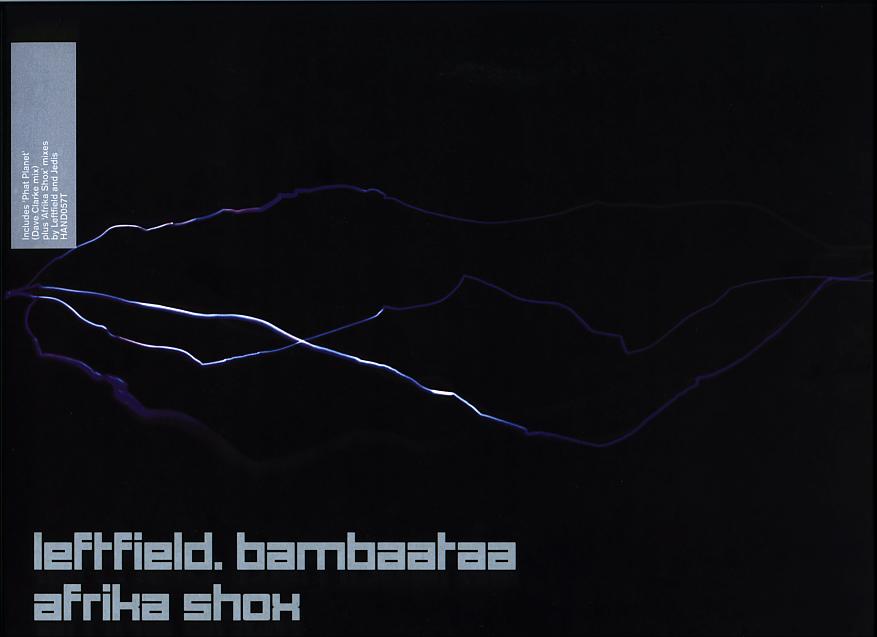
Leftfield ft. Afrika Bambaataa - Afrika Shox (Narrative theory)

Track: Afrika Shox
Artist: Leftfield ft. Afrika Bambaataa
Genre: Electronic/ Acid House
Release: 6th September 1999

Music Video Director: Chris Cunningham


Chris Cunningham's interpretation of "Afrika Shox" engulfs us in a dystopian world that appears to be a metaphor for the need of social change; the swift cinematography and darkly lit mise-en-scene not only complement the rather underground, electronic genre of the track, but also Afrika Bambaataa's lyrics. For example, "Are you ready for the new age, they are setting the stage, for the renegades, to control your mind". These lyrics, referring to how the outlaws in society are being prepared for a new age of control; the outlaw being portrayed by the African American veteran "zombie", whereas, the control is most likely to come from the likes of corporate fat cats and government officials. The video therefore amplifies the lyrics, creating an interesting relationship between the music and visuals as it supports and expands on the point the lyrics are trying to make. Therefore, supporting Goodwin's analysis. However, I will go on to expand this point within my analysis, but it's an interesting idea to highlight now; one which Chris Cunningham seems to have grasped and used to shock us about real truths in American society. 


The video begins with an establishing shot of a large corporate building, essentially welcoming us in to this dystopian city by giving us a firm idea of where the power lies. Furthermore, the low angle helps further enforce this as it gives the building a form of subjugation; whereby, it's as if the city is constantly being looked over and judged from above. Additionally, the camera movement supports this idea in the way that it slowly pans down from the building, creating a sense of opposition between this corrupt, corporate dystopia and the citizens of the city; a great example of binary opposition, which follows well with in Claude Levis Strauss' narrative theory. The dystopia being portrayed within "Afrika Shox" bares similar reference to psychological thriller, "Pi". Whereby, a mathematical theorist cracks the worlds natural numerical pattern and soon becomes under threat from corporate or other governed power to hand over the digits for their own greed i.e. in stoke analysing. The paranoid protagonist is often compared to an ant, belittled in a large world riddled with corruption. This music video was created for the soundtrack using clips from the film, it showcases a few of the ideas mentioned.


Furthermore, the idea of a subjugated dystopia is being reinforced through the use of editing, sound and mise-en-scene. This is as the video cuts from the towering building to a police car and then citizens walking to a shot of a security guard; further promoting the closely watched area of control. Additionally, the shot of the police car featuring diegetic sounds of the siren connotes progressing trouble; as if to symbolize and cement ideas of criminal activity in dystopian New York. Moreover, the three progressing shots are framed very tightly in the mise-en-scene, especially the shot of the civilians walking. This again indicates how trapped they are in such a controlled and corrupt society, with little room for free expression. Moreover, notice how the sequence of shots go from the images on the left (police > civilians > security), sandwiching the public in between authorities.


The following sequence of shots are interesting, the camera pans from a low-angle shot looking in to the sunlight to a shot of a man clinging to a fence in a car park. This could be connoting the idea of being trapped from the light, the light of course representing true freedom and goodness; Cunningham could have been suggesting through this panning shot that we are imprisoned (represented by the gripping of the fence), trapped to go out and make a difference in the world as this is decided for us by the individuals with the power to make an actual difference. It seems the dystopia in which Cunningham has created doesn't allow for free speech, and ultimately it comes back to control over opinions and actions from a higher power. Additionally, the camerawork and sound seem to connote the idea of de-evolution. For example, in films like Kubrick's "2001:A Space Odyssey" shots pan up with the overlay of classical music in order to illustrate ideas of evolution. In contrast, Afrika Shox pans down from the light with the accompaniment of rather menacing underground sounds. This contrast shows how perhaps Cunningham is trying to portray how as a race, we are beginning to evolve backwards; we are digressing back to the stage of apes, as we can no longer speak freely when we want to, fighting over objects for our own personal gain. i.e. oil, in comparison to apes, foods.


Unfortunately, the classical music can't be heard is it begins just after the video cuts, but 
this scene shows the leap in evolution; the discovery of weapons to kill -> reaching and inhabiting outer space. 


Still from "Essex Boys", depicting light bars as
a connotation for prison.
Furthermore, the lighting and colour grade also add to the idea of dystopia; grey colour tone, and rather dull bars of light are similar schemes of mise-en-scene to films such as "The Matrix" and "Essex Boys", films which also take place in a dystopian world. Additionally, although released after "Afrika Shox", "Essex Boys" gives similar connotations using the reflections of light bars. For example, in "Essex Boys" the light bars represent prison, which is what is also being portrayed through mise-en-scene in "Afrika Shox".

Still illustrating contrast between protagonist
and bagged trash
We are then introduced to the protagonist of the music video as the camera glides down a gloomy
alleyway, here, it seems that the individual is being compared to trash, as if this is how blends in with the dystopic society. Considering the character is black, this particular shot and the comparison of trash seems to connote the idea that white people have used the black person for their own good, taking from them and eventually throwing them out when they're not needed anymore.

Furthermore, although white people are depicted as trapped by this oppressive dystopia, black people are even more controlled within this fictional society; this is seen through the white man grasping to a fence in a rather open space, contrasting with the black character within the very confined alleyway. This again, reinforces Claude Levi-Strauss' theory of constant conflict, it also supports the idea of comparing black people to trash within the dystopia; in this creation of conflict, it's as if white people are the trash that is left to the streets, they are disregarded and in a sense controlled. However, the black people are representative of the bagged rubbish, they are even so more confined and subjugated within Cunningham's representation of dystopic New York.

Camerawork and movement depict the confusion of the protagonist, indicating his anxiety and signifying the chaos around him. For example, tight close-ups on the protagonist are performed out of focus to perhaps indicate that the character is out of touch with reality, he's distant from the world he is surrounded by and the focus again perhaps suggests he is not accepted by it. Additionally, handheld camera movement suggests confusion and panic inflicted by the protagonists surroundings.


This sequence gives a solid visual representation of binary opposition between ethnic groups, further demonstrating the divide between white and black people within the dystopic society. We see the protagonist reach out for help from the white business man once they exchange eye contact , the business man simply ignores the black character and continues reading his paper. Moreover, shot-reverse-shot is used to highlight this binary opposition between races; creating conflict by flipping between the two opposing characters. This opposition supports Claude Levis Strauss' theory conceptually and visually, editing creates visual conflict between the two characters; whereas, the different ethnicity of each character drives the conceptual ideas of conflict. In a metaphorical sense, this sequence could be connoting how African-American's are looking for help to get their culture back from the white man; as if their identity is deteriorating as the white man is taking literally everything from them (this idea is supported again further on in the video).

Additionally, we see the protagonist being introduced as a sort of fragile zombie at this point; this is as whilst reaching out for help his arm is knocked off by a passer by, who is also interestingly a white business man. Moreover, the visual portrayal of the protagonist's arm literally shattering off on to the pavement could perhaps be a connotation of how society is hard on it's black population, literally crumbling it's citizens. For example, it is no secret that black people are twice as likely to be stopped and searched, even harassed by the police as opposed to other ethnic groups. Furthermore, the protagonist is also wearing dog tags, giving us an indication that he has been to war, in particular Vietnam; many soldiers returning from the war were disrespected and shamed within society, a fair few being subject to being spat on by the public. This neglect for those fighting for their country is another aspect of representation of specific groups that Cunningham could be portraying within "Afrika Shox".

The link below supports ideas of disrespect and neglect for soldiers fighting in Vietnam. 
http://www.startribune.com/opinion/commentaries/160444095.html

Furthermore, we reach a part in the video where the protagonist encounters three white males breakdancing; this is interesting as breakdancing originated from black and puerto-rican youths in New York city during the early 1970's. Therefore, Strauss' ideas about constant creation of conflict are re-enforced  once we reach this sequence as the white males seem to essentially be robbing the protagonist of his culture. Additionally, breakdancing originated from New York and as the video takes place in New York it could be conveying a dystopia, whereby, black people have had their histories robbed from them; in this dystopia, African-American's seem to serve no place in the world, as the white population has adopted every cultural marker in black history for their own.

 In terms of mise-en-scene, chiaroscuro lighting is used during this scene, this is indicated by the light reflections off of the wet road; moreover, paying homage to noir films, such as "Once Upon A Time In America" and "The Third Man". Additionally, the setting of this sequence is very reflective of the music; the underground car park holds connotations to underground music i.e. genres of music that operate outside of mainstream culture, in this case the electronic genre. Furthermore, one of the white break-dancers ends up destroying the protagonists leg with no remorse; this crumbling of body parts references earlier when his hand was destroyed by a white business man, also showing no remorse. This again supports the idea that our white society is literally crumbling black citizens, and each loss of the protagonist's limb is a sign of ignorance towards their culture.

The music video reaches a point where the protagonist is left broken, limbs shattered on the floor; he is approached by the only other black character in the video (Afrika Bambaataa). Ironically, this character is the only to offer help, let alone acknowledge the protagonist and he is from the same ethnic group. Cunningham is perhaps showing within this dystopia that ethnic groups only look out for their own members, not caring for anyone different to themselves; in a way, portraying the inequality that is still present today in a more exaggerated manner.

Additionally, the low-angle shot of Afrika Bambaataa gives his character a sense of power; perhaps connoting the idea that he is the only one who can help and so in the protagonist's eyes, Afrika Bambaataa is mighty in his intentions. On the other hand, Bambaataa's character is reminiscent of a wise man, in a rather tribal way; metaphorically, this could be a reflection of how people need to regain touch of their own spiritual and moral roots and if not they become hollow and empty inside, destroyed by the soullessness of the urban environment i.e. concrete jungle of New York. This is shown through the protagonist's empty body and ease of destruction.

"Afrika Shox" ends with the protagonist being hit by a taxi and crumbling into cloud of debris, leaving the audience with an un-resolved conflict. As this conflict is not resolved, the music video seems to follow Barthes' code in regards to open texts, this is where the audience is able to create their own meaning and formulate different interpretations. Cunningham could be showing us that we are gradually wearing down our black citizens, and there becomes a breaking point; once we pass that breaking point there is no going back to pick up the pieces. Moreover, the reason we are going down this path is because our society is hard on African-Carribean citizens, and the music video could essentially be a representation of the loss of faith in our society from these citizens; sooner or later, all faith will be lost is what may be communicated here.

Monday, 18 November 2013

DJ Shadow: Live from the Shadowsphere

Artist: DJ Shadow
Genre: Trip-hop
Concert Venue: UEA LCR, Norwich
Concert Date: Thursday 23rd June 2011

Information:
Back in June 2011, I went to see DJ Shadow at the UEA LCR; this concert was different from any I have been to before and since as it was more about the immersive visuals from the artists proclaimed "Shadowsphere", where as, his music acted as a sort of soundtrack to illustrate these interesting short films.


Audience:

During the concert, I noticed some distinct factors about the audience that has now given me a better idea of the type of person/people who appreciate the trip-hop genre; it is first useful to note that DJ Shadow aka Joshua Davis is an American born music producer and DJ. Firstly, the majority of the audience at the concert were male, this could be explained by the origins of trip-hop that I touched on in a previous blog post; whereby, groups of predominately male soundsystems were kick-starters of the hip-hop and furthermore trip-hop genre. e.g. DJ Kool Herc, Grandmaster Flash and later on The Wild Bunch or Massive Attack. In terms of age, other than me and the friend I went with the most part of the audience appeared to be aged in their mid 20's and above, ranging up to late 50's; this could indicate trip-hop's maturity as a genre, it's not generic pop that uses the same similar riffs and beats in order to satisfy a more focused teen audience. Instead, and particularly in DJ Shadow's case, tracks are created from samples of old and usually unheard of records synched with newly crafted beats or rhythms in order to construct sounds that are rather alternative in their nature.

DJ Shadow, wearing a baseball cap.
Furthermore, the main ethnic backgrounds of the audience were caucasian and african-carribean; this is interesting as trip-hop was created through the primary influence of hip-hop and adapted in bristol, hip-hop's primary founders were of african-carribean ethnicity; whereas, the trip-hop genre evolved via individuals of caucasian ethnicty, as well as african-carribean. Therefore, this could be an indication that trip-hop is a genre that has been formed by and can be fully appreciated by these two different ethnic groups. Additionally, a fashion accessory that was common amongst the audience was a baseball cap, this type of cap is perhaps a signifier of the genre as well as the artist himself; the baseball cap originated from Brooklyn in the 1860's when the local baseball team adapted it as part of their kit when playing. Moreover, by the 1900's this style of hat became very popular and from then on in became a everyday piece of fashion; interestingly, hip-hop originated from the Bronx, an area very close to Brooklyn and so it seems that as a result this type of hat became an iconic fashion symbol of the hip-hop genre. Again, as trip-hop was formed through the primary influence of this genre, so was the fashion, which could explain it's prevalence in the audience. On the other hand, DJ Shadow consistently wears a baseball cap and so audience prevalence could be explained by the influence on fan base in terms of fashion.

I would say that the type of person who attended this concert had a strong appreciation for the arts, this is as the concert was gripping visually as well as in auditory essence.

What does this concert about the trip-hop genre?

DJ Shadow's Live from the Shadowsphere seems to indicate the importance of strong visuals or narrative in the accompaniment to tracks within the trip-hop genre, it's as if this music acts as more of soundtrack than anything else. This was highly reflective within the concert through the use of many short films and visual effects in order to keep the audience captivated; it was less about seeing the artist live, but more about the atmosphere of this new visual experience, whilst appreciating his music. In contrast, when I went to see an indie-rock band (Arctic Monkeys) a few weeks back, it was more about the stage presence of front man Alex Turner and singing along with the band to all of their songs; also, getting involved in moving about with the crowd. Whereby, DJ Shadow was about kicking back and appreciating what was being seen and heard, in a sense giving it a cinematic aesthetic. These two contrasting genres and concerts lay down the same format for music videos as well, indie-rock music videos often feature stage performance or the lead singer as the protagonist. Whereas, trip-hop videos are more about how well the music plays out to a visual narrative.

Thursday, 14 November 2013

Shooting Schedule

Date: Tuesday 1st October 2013
Time: 11:45am - 12:30pm
Location: The Forum, Norwich
Equipment: Canon 550D DSLR (w/ 18-55mm and 28-125mm lenses), tripod.
Crew: Myself and my other group partner (Hamish), we took turns operating the camera and     navigating shot types.

This shoot was planned based around the strike occurring on the stated day; our music video involves the illustration of political inequality between the corporate bankers or government officials and the everyday working class citizen. Therefore, this day was dedicated to getting pick up shots of the National Union Teacher's strike in order to portray binary opposition against the pick up shots we planned to get of bankers in the docklands. Furthermore, me and the other member of my group met at the forum half and hour prior to the beginning of the strike in order to set up equipment and position ourselves for the first shots we were going to get. Moreover, the benefits of being able to record this strike is that it means we have more realistic pick-ups of the actions currently being taken against the government, allowing us to portray a more impacting visual narrative.

Date: Tuesday 8th October 2013
Time: 10:00am - 8:00pm
Locations: London - American Embassy, Docklands and St Paul's tube station.
Equipment: Canon 550D DSLR (w/ 18-55mm, 28-125mm and 75-300mm lenses), Canon EOS 5 35mm SLR, tripod, dolly.
Props:  Briefcase and cardboard sign.
Crew: Myself and my other group partner (Hamish), we took turns operating the camera and     navigating shot types.
Cast: Robbie Morris, a fellow classmate, brought in to portray both characters on each side of our split-screen narrative.

Once we had come to a conclusion about the plan of our music video, we ended up debating over the locations; Norwich is a great place for filming the most part of our music video, however, there were just some shots that needed to be done in metropolitan city in order to best represent the business man character in our production. Therefore, we decided that London would be the best place to give a sense of a corporate environment, perfect for scenes of the business man and shots that may contrast the protest.

Once all was planned out, we got on the train at about 10:00am to London; however, due to delays at a station on route we ended up getting to London a little later than expected (about 12:30pm). Then, we got the tube from London Liverpool Street to the American Embassy, here we were able to get a few pick-up shots, contrasting narrative for the businessman and protestor and also some possible images for our print production. Unfortunately, we were stopped and detailed by the police during our filming due to "suspicious" activity linking to ideas of terrorism, however, after we had been checked out the police had no problem of our continuation but warned us that the embassy may call the police again. Furthermore, we travelled to the Docklands in order to capture shots of the business man character; additionally, gaining pick-up shots of the corporate world surrounding us. This location was perfect for the use of a tracking shot, allowing us to give our music video some more fluidity, so we brought out the dolly in order to this. Again, we were stopped on several occasions by security guards for filming in a public place, luckily I had my school lanyard and so was able to prove that we were shooting for a student project. Moving on, we then headed down in to Canary wharf tube station in order to get a time-lapse for the businessman; to our fortune, many business like individuals had just finished work and so we were able to capture this within the shot, giving a strong sense of Robbie's character. In addition, on our way back to London Liverpool Street we stopped at St Paul's tube station which was perfect for the matching time-lapse of the protester, as it was quite desolate and bland.

Date: Tuesday 29th October 2013
Time: 11:45am - 12:15pm
Location: Derelict Building, Bracondale Mill Gate, Norwich.
Equipment: Canon 550D DSLR (w/ 18-55mm lens), tripod.
Crew: Myself and my other group partner (Hamish), we took turns operating the camera and     navigating shot types.

As the actor we were using wasn't available on this day, me and Hamish decided to go out and film the time-lapse that would oppose the large corporate building time-lapse we filmed in London. From our sixth form, we cycled to a derelict building at Bracondale Mill Gate with our equipment, with ease we were able to get the shot due to the open space and little public. However, we had the contact of the landlords had any problems arisen.

Date: Saturday 5th November 2013
Time: 3:00pm - 7:00pm
Locations: Hamish's house and Robbie's house (actor)
Equipment: Canon 550D DSLR (w/ 18-55mm and 28-125mm lenses), tripod.
Crew: Myself and my other group partner (Hamish), we took turns operating the camera and     navigating shot types.
Cast: Robbie Morris, a fellow classmate, brought in to portray both characters on each side of our split-screen narrative.

Because the daylight was fading, we used this day to film the interior shots that would make up our opening sequence for the music video. Firstly, Hamish's house was used for the business man characters morning routine, this is as he had a modern room that looked as it belonged to someone with a comfortable lifestyle, also, the kitchen in his house was very modern and fitted well with the character. On the other hand, for the protestor, we used Robbie's (our actors) house in order to create opposition. Using Robbie's living room and kitchen we were able to create the impression that he was not wealthy, nor poor.

Date: Monday 11th November 2013
Time: 2:00pm - 4:00pm
Locations: City centre/ Starbucks
Equipment: Canon 550D DSLR (w/ 18-55mm and 28-125mm lenses), tripod.
Crew: Myself and my other group partner (Hamish), we took turns operating the camera and     navigating shot types.
Cast: Robbie Morris, a fellow classmate, brought in to portray both characters on each side of our split-screen narrative.

We used this time to shoot the scenes focusing on the contrast in lifestyle and interest between characters, specifically focusing on consumerism and self-image. The reason for shooting at Starbucks is that it indicated consumerism and so linked well with the business man persona; additionally, we shot a sequence at Moss to show the business man's materialistic interest in suits and in contrast, Oxfam, to show that protestor character is not too concerned about expensive brands or consumerism, but more for how he can help others.


Thursday, 7 November 2013

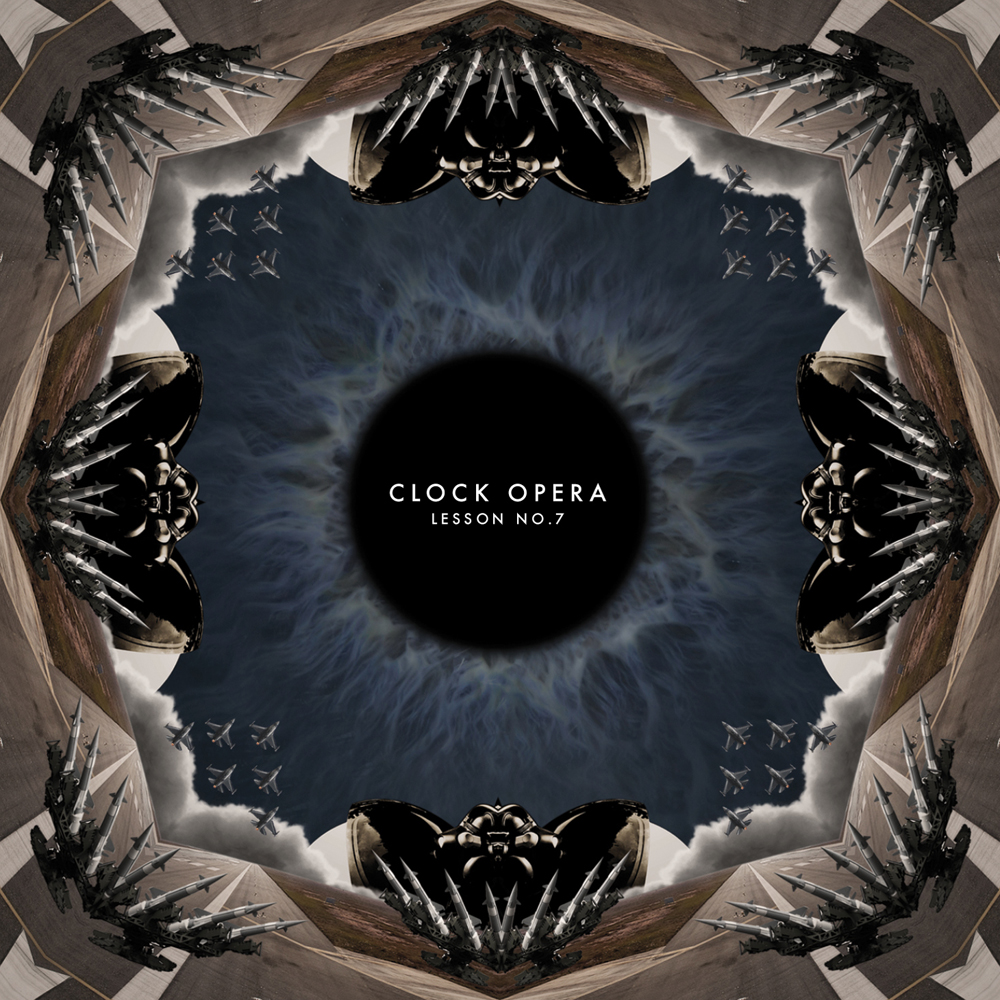
Clock Opera - "Lesson No.7" (Goodwin's music video analysis)

Track: Lesson No.7
Artist: Clock Opera
Genre: Indie rock
Release: 3rd October 2011

Music Video Director: Aoife McArdell


Clock Opera are an indie rock band based in London. They were formed in 2009 by singer, guitarist and sampler Guy Connelly, the band members are as follows; Andy West on bass and guitar, Che Albrighton on drums and Dan Armstrong on keyboard and vocals. Although they are labelled as indie rock, their music seems to contain some elements of electro; used euphorically like bands such as Metronomy, whilst they additional operate in similar vein to Coldplay.


Music videos demonstrate genre characteristics:

A common characteristic of English indie-rock is to establish the Britishness within the music video, an example would be the use of a council estate as a primary location in the music video for "The View From The Afternoon"- Arctic Monkeys. This is as is council housing is primarily situated within the UK, and is easily signified by tower blocks often showing signs of urban decay. Furthermore, Aoife McArdell establishes British society through the use of council estates as a location, much like in "A View From The Afternoon". Additionally, BBC news footage is used as another establishment used to characterise the genre through the indication of Britishness, as well as injecting the video with an authentic, documentary type style.


On the other hand, "Lesson No. 7" seems to be contradictory of a common indie-rock characteristic; this is the lack of incorporation of the band playing the track within the music video. Furthermore, it is common to cut to shots of the band whilst they are playing their instruments even if it is in between narrative or perhaps experimentally done. An example would be the music video for "Song 2" - Blur, whereby flashing lights, wind generators and stunt ropes are used within the performance of the band to convey a sense of the powerful riffs and drum beats. However, "Lesson No. 7" relies purely on narrative and doesn't feature and band performance, giving a slight contradiction to Goodwin's theory relating to genre conventions.


Furthermore, as indie-rock is a genre that progresses from the stand alone rock genre, we can associate some of these genre characteristics to "Lesson No . 7"; rock draws affiliation with rebellion and political activism. An example of rock rebellion would be bands smashing up their instruments at the end of their gigs. In relation to "Lesson No. 7", it appears Aofie McArdell has illustrated and modernised this classic characteristic of rock stage performance within his music video for Clock Opera. The way in which we see the protagonist smash up the car within the video draws a divine similarity to how performers such as Pete Townshend smashed up their guitars, particularly with the car resembling an amp. Moreover, perhaps illustrating how violence in rock has progressed from a stage of entertainment to genuine destruction. In addition, and as mentioned before the rock genre also draws association with political activism; songs such as "Fortunate Son" by Creedence Clearwater Revival criticise jingoism and supporters of the use of military force who don't have to face the consequences of it, particularly relevant as of it's release during The Vietnam War. This therefore showing how rock music is a symbolism of protest against larger world issues i.e. War. Furthermore, "Lesson No. 7" relates to this in the way that it deals with issues that are specifically relatable to Britain i.e. The riots influence on youth crime; therefore, the music video could perhaps be illustrating the significance of genre on how issues are dealt with e.g. Rock = larger world issues, indie-rock = locally significant issues. Moreover, this is supported by the term independent that is used to describe this sub-genre of rock, meaning that bands of this caliber aren't supported or influenced enough by any big record labels to make protest against larger mediums, instead going for smaller and more relatable topics to base their lyrics on. Overall, this shows how "Lesson No. 7" demonstrates genre characteristics of indie-rock through illustration and in some places contradiction via the music video.


There is a link between lyrics and visuals (either illustrative, amplifying, contradicting).


Using Goodwin's music video analysis of the connection between lyrics and visuals, it seems that the video for "Lesson No.7" is mainly illustrative and sometimes amplifying of Clock Opera's lyrics. Firstly, after being introduced to the protagonist there is a high angle shot of a group of five adolescents (wearing tracksuits and smoking), this then cuts to a mid-shot of the protagonist looking down at them through a wire fence; the lyrics that accompany this sequence are "You're crouched like a hunter, seconds from a kill". Moreover, use of camera angles and editing compare the protagonist to a hunter; a being that gains powerful advantage over naive creatures by stalking its prey, the prey in this case being the adolescents in the car park. Therefore, the visuals are illustrating the lyrics by using the protagonist as a metaphor for the hunter, ready to strike upon the group within the car park. Additionally, the fact that the protagonist is grasping the wire fence as he looks down upon the gang shows that his moves are restricted, as if he is unable to take action against them yet.

Furthermore, the second line of lyrics is "You're still an empty vessel, impossible to fill"; interestingly enough, in behavioural psychology, "empty vessel" is a term describing how an individual ends up with worthless outcomes when they are trying to please everyone. This links in with the Goodwin's theory about the amplification of lyrics, as, it essentially foreshadows the latter part of the music video; whereby, the protagonists actions don't solve anything but instead create more of the same violence. 

Moving on, the video continues to illustrate the lyrics in a rather metaphorical way that can only really be understood once the context behind the video is known; "Lesson No. 7" uses the London riots as a backdrop to showcase the disturbing, anarchic shift in our society. Getting back to the point, the lyrics at the end of the first verse go on to say "One foot in the future, one foot in the past, shitting on the present, as you're lashed to the mast". In contrast, the visuals cut from a low- angle shot of a women shouting at the gang, to a medium close-up of one of the gang members as he tussles with the others and eventually to the protagonist drinking some milk from the fridge. Interestingly, the cuts in this sequence are made between "future", "past" and "present" within the lyrics, giving each shot significant meaning. Firstly, we see an older women shouting at the gang from above as the lyrics talk about "future", signifying that the younger generation need to be better disciplined in the future in order to prevent outbreaks of misbehaviour and violence, such as the London riots. Secondly, when "past" is highlighted in the lyrics, the gang tussle that is being visualised is an indicator of how these young adolescents still feel that they are in control because of that previous event; they're stuck in a moment of past action that is yet to be broken. Finally, the symbolism of the protagonist drinking milk whilst we hear "shitting on the present" is that we aren't doing anything to take action against our broken society, we're wasting time by not making things right, only allowing matters to get worse.   


The track then reaches it's first chorus; however, I feel that it is more appropriately linked to the visuals within the second and third repeat. Nevertheless, one particular line seems to be relevant to mise-en-scene within the first hearing of this chorus; specifically the notion of weakness at the beginning of the character's growth. When we hear "One rule for the weak" we see the protagonist get up on the word "weak", as if this term applies to his calling. Therefore, giving us an indication of how we should see the character as now, and how he see's himself; again, linking with the illustration of Clock Opera's lyrics with the visuals of McArdell's video.

This shot could be illustrative of how
his stronger more aggressive side is seen
as another part of him, using shadows to
portray this side of the protagonist as dark.
Furthermore, the lyrics in the next verse are "I wanna be persuaded, I wanna be talked down, I wanna be won over, and I want to be brought round, but you only talk in capitals, all-conquering truths, Lesson No.7 is an irrelevance to you". Firstly,  the "wanna"/"want to" lyrics link with the visuals in the way that they seem to be the protagonist's inner thoughts; it's as if he doesn't want to go out and be the one to put some sense in to the other characters. The visual link being the tracking shots of the protagonist psyching himself up, cutting to a close-up of him looking in worry over a bridge. However, his aggressiveness is driving him towards this outcome, illustrated via the cuts between him and the barking dog. Secondly, the last line of this verse "Lesson No. 7 is an irrelevance to you" could be suggesting that "Lesson No. 7" is the softer way of dealing with violent young criminals, such as the gang portrayed in the video; therefore, by stating it's use as irrelevant it seems that it's effective in reforming criminals, and instead fighting fire with fire is believed to be the key idea in the protagonist's eyes.


POV shot from protagonists view; shaky movement, spit
on the camera and a taunting gang member. 
McArdell uses the second chorus as the strongest out of the three to compose a solid link between lyrics and visuals; the lyrics "Belief and seeing are both often wrong" are accompanied by mid-shots of the protagonist being hassled by the gang, quickly cutting back and fourth between POV shots of them spitting on the camera. Ultimately, McArdell has created this in order to amplify the lyrics; he's trying to show that as an individual, you may hear or see how these gangs are portrayed in the media, but you really have to experience it to understand the true terror of it. Therefore, showing a relation to Goodwin's theory as McArdell has taken the basic meaning of the lyrics, applied it to a certain subject and created a context of which the lyrics can be associated with; essentially heightening their connotations.

Secondly, the lyrics and visuals firmly link in order to show how the protagonist's modification of identity enhances his mental and physical persona. For example, the lyric "strong" is accompanied by a medium close-up of the protagonist in a mask pulling out a weapon (baseball bat); the drawing of the weapon comes exactly on this lyric, as well as the first shot of him in the properly secured mask. Therefore, indicating to us how the character feels stronger through using a mask to modify his identity; it's giving him the power to fight back as he can't be seen as the individual responsible. In contrast, when the first chorus is heard the protagonists movements are synched with the word "weak", showing the progression this mask gives him in terms of releasing his true emotions towards the gang. (perhaps this could be a metaphor for our society, would we fight back if our identity was hidden?) Nevertheless, this particular example is very illustrative of Goodwin's theory, literally pointing out to us the characters physical and emotional strength as the track advances.

Moving on, the next verse portrays a rather weak link between lyrics and visuals, however it is still an illustrative link at that; "Every part of the heartbeat is the closing of the door, to keep the blood flowing, it can't come back anymore, hear the people calling, calling out for you, but it's just your head they're ever after, and they want it cold and blue. In context to the video, these lyrics seem to connote the idea that however pleasurable the high one gets from rebelling and reacting to the circumstance (i.e. the gang), ultimately this is short lived, and in the long run just creates more of the same (i.e. gang violence). In terms of the visuals during this sequence, we see cuts between close-ups of the protagonist in the car, tracking shots of natural greenland and a medium close-up of the cars rear-view mirror, reflecting the protagonist taking his mask off.


The third and final chorus of the song seems to link the protagonist to his most violent stage of growth, this being the physical assault of other human beings. Furthermore, this final link of lyrics confirms to us that each chorus is a sign of character progression and growth, seen within visuals. Moreover, the line "belief and seeing are both often wrong" is a particularly strong link between all three; in the first chorus the protagonist has only seen how gangs have had an effect on society, via the news and observing them out of his window. Secondly, the protagonist actually experiences gang torment through simply walking past them; finally, we see him actually tormenting other individuals himself. Therefore, showing how McArdell has created a progressive relationship between lyrics and visuals within the tracks chorus'; firstly illustrative, then amplifying and finally contradicting. The reason the last is contradicting is that it places the protagonist as the wrongdoer, instead of allowing his actions to follow based on justified sights or experience.

There is a relationship between music and visuals (either illustrative, amplifying, contradicting).
 
Relationships between the music and visuals within "Lesson No. 7" seem to follow a mainly illustrative pattern; cutting between shots follows the general pace of the instruments, as well as their changing chords and patterns. For example, the beginning of the song features a guitar as the only instrument played during the first verse and chorus; as a result, this allows for prolonged shots to begin the music video replicating the slow place set by the introductory guitar. Furthermore, the guitar switches between two primary notes and this creates cutting points upon the change between chords, the music video abides by this through the use of these points to switch between various shots whilst maintaing a steady montage. Additionally, when a rather reluctant bass drum pattern in introduced during the first chorus we see an amplification of the visuals via the music. For example, with every beat we see a rather strong character movement, such as the protagonist getting up from his sofa on the 3rd beat of the drum.

Moving on, the introduction of the consistent open high hat and heavier guitar rift are allowing the track to begin it's build up to the first climatic point of the song (and video); this is again illustrated by the editing, movement and shot variety within the visuals. For example, we see the protagonist walking along the bridge cut together with a variety of angles and different shots of the environment, all quickly shifting in-between each other in order to notify the tracks building pace. Additionally, the protagonist's movements become more active and energetic i.e. punching, which also informs the progressing tempo.

The track then reaches it's first climatic point, creating a more "manic" montage of visuals formed through editing; seemingly portraying an illustration of release from the songs build up, as well as an amplification of the newly introduced heavy drum rhythms. For example, cuts between the protagonist's bat making contact with the car are edited together franticly, in a montage that could be seen as a continuous sequence of jump cuts, illustrating the powerful guitar riffs and drum patterns. In addition, the hits of the bat match up with some of the drum strikes, giving a great amplification of the percussion via the smashing car windows. Moreover, as this first climatic point ends, shots begin to become more prolonged and there is less variety between the different shot types used.

Again, as the track builds up again and reaches it's climatic point we see the same pattern emerge within the editing and movement of the visuals as before. The shots types become more varied, cuts begin to quicken with the pace of the song and interestingly enough the violent punches thrown by the protagonist are again an amplification of the drum hits. Overall, "Lesson No. 7" links to Goodwin's ideas about the relationship between music and visuals in an illustrative way yet again, and at some points an amplification of the track.

The demands of the record label will include the need for lots of close ups of the artist and the artist may develop motifs which recur across their work (a visual style).

Clock Opera are a band that don't often feature in their own music videos, and so I would say that Goodwin's point about close-ups of the artist as a requirement of the record label isn't entirely applicable to their music videos. However, "Lesson No. 7" is a great example of the unique visual style that recurs across Clock Opera's music videography. This is as Clock Opera produce music videos that are more suited to being short films, they focus on telling a story and addressing a wider point to the audience; illustrating this narrative also via the use of rather masterful cinematography in order to give visually aesthetic appeal as well. For example, "Lesson No. 7" is in essence a short film that illustrates how trying to fight fire with fire can end up with worthless outcomes, and that some people can't be taught. Moreover, the track itself acts as a soundtrack to this short film, eliminating the need for dialogue as the film is explained in the lyrics; this seems to be a motif that has developed throughout Clock Opera's music videos. However, "Lesson No.7" is also an example of how Clock Opera don't abide by genre characteristics, the music video doesn't feature any band members or cuts to stage performance. The reason for this may be that, independent record labels are more focused upon allowing bands to stand out through having a more unique style amongst their music videos as means of getting notability from a wider audience. For example, the impressive cinematography may appeal to filmmakers or photographers, who perhaps come to appreciate the music through the video itself. On the other hand, if the record label set out to abide by genre specific characteristics in Clock Opera's music videos they may gain less recognition as stage performance and artist close-ups are featured in such a wide variety of other music videos that it perhaps becomes a bit monotonous.

There is frequently reference to notion of looking (screens within screens, telescopes, etc) and particularly voyeuristic treatment of the female body. 

Again, "Lesson No. 7" doesn't abide by Goodwin's theory entirely; there is not any real sense of voyeuristic treatment throughout the entirety of the music video. However, there are strong links to the frequent reference of notion of looking, this is a point that is vicariously reinforced throughout the cinematography of the video. For example, the first shot of the music video features the protagonist staring out of his window in a rather prolonged shot; reflections of the tower blocks can be seen overlaying him in a sort of natural double exposure, he is also depicted on the other side of a curtain and so his features are partially blurred. Moreover, referencing the notion of looking as we are not only viewing the character looking out, but are able to make out what he is looking at through use of reflections.

Interestingly enough, there is a shot at 1:40 within the video again using windows to reflect the council estate whilst a couple are shouting at the protagonist; this gives me the impression that shots capturing disillusioned expressions of the protagonist  and the rowdiness of the couple were set up so that reflections could be utilised, as a way of metaphorically mirroring the stereotypical characteristics of life on a council estate. Additionally, these shots seem to be influenced and portray essence of Lee Friedlander's photography; Friedlander consistently used reflections in order to capture ironic portrayals of America, this style of photography became widely recognised as capturing the"social landscape". In this sense, Aoife McArdell has utilised reflections in this style to represent Britain's social and urban landscape, homaging Friedlander's ideas and techniques. Ultimately, linking back to Goodwin's notion of looking through reflections as a sort of screen within a screen.

"Mount Rushmore, South Dakota", 1969 - Lee Friedlander.
Friedlander's depiction of tourism in America, utilised via reflections of this
famous American monument.
Additionally, the majority of shots where the protagonist is frequently referenced to looking seem to include transparent or in one case, opaque barriers between us and the protagonist. For example, the first shot contains a curtain in front of the protagonist, a latter the notion of him looking through and grappling a wire fence, frequent featuring of windows and shots including the protagonist referenced gazing in a mask. This could be conveying how the protagonist is distant or at least distancing himself from the world around him, it is as if he is constantly fearing letting his world and the outside society collide. However, theres something in him that wants to take action and this is where the mask comes in to play; he seems to go out in order to try to make the world around him a place that he doesn't need to restrict himself from, the use of the mask may be to diminish himself from the broken society and others whilst he is out there. Therefore, these barriers are perhaps used to represent the protagonist's fear, as a sort of metaphorical defence mechanism to represent the characters own armour against society.  

Furthermore, Goodwin's theory is again referenced at 0:48 and 4:00, whereby mirrors are used in order to capture the protagonist. These shots also seem to link in with each other, and they give us an understanding of how the protagonist see's himself at two different stages; the first mirrored shot depicts the character slouching and smoking on a sofa, where as in the second we see him taking of his mask in the car. Therefore, showing how he has evolved from seeing himself as a rather restricted and pathetic individual to him removing his mask and embracing the world for what it is. Moreover, this change could be explained through Mikhail Bakhtin's view on identity; whereby, the self is un-finalised and identity progresses dependently on who and what is encountered.


Finally, the notion of screens within screens is again referenced at 2:50 when the protagonist gives his camera to a child character and instructs him to film the car being smashed up. This makes an interesting link to a previous shot, whereby, the protagonist is watching a news report and footage of the London Riots is played; it's as if he's trying to make the point that he's watched the destruction caused by individuals like the gang in the video and so now they should watch his. However, it could also be illustrating the idea that the protagonist is no better than the rioters, this is by showing him behind the screen as a comparison point to the rioters behind the screen within the news footage. Ultimately, reference to looking is an idea that is very strongly depicted in "Lesson No.7", linking the music video to Goodwin's theory quite succinctly.


There are often intertextual references (to Films, TV programmes, other music videos).

The themes and aesthetic of "Lesson No. 7" create strong intertextual links to the novel "A Clockwork
Orange", as well as the film. Firstly, the author of the novel (Anthony Burgess), was partially inspired to write the novel after returning to Britain after a rather long period of travelling. On return, he observed a horrible rise in youth violence and a change in culture that he found rather despicable i.e. the introduction of tower blocks as means of council housing, as well as the rapid shift in fashion and trends. Therefore, he wanted to portray this in a futuristic manner as a way of showing where we would end up if things remained to change in the way they were at that time. This is referenced in the music video through the similar themes of rise in youth violence, the characteristics of tower blocks and the notion of acting on a problem that only creates a worse outcome. In addition to this, the film is referenced via the constant establishment of the decrepitly bland and unsightly tower blocks, which are the homes to both the gang in the video as well as Alex and his "droogs" from "A Clockwork Orange". This link could have been made to illustrate how Anthony Burgess wasn't far off with his predications of the future, showcasing the gang activity that these council estates encourage. Interestingly enough, "Lesson No. 7" and "A Clockwork Orange" were also filmed on the same estate (Thamesmead) which gives even more reason to draw links between the two.

Shots from "A Clockwork Orange" (left) and "Lesson No. 7" (right),
showcasing the same location i.e. Thamesmead estate.
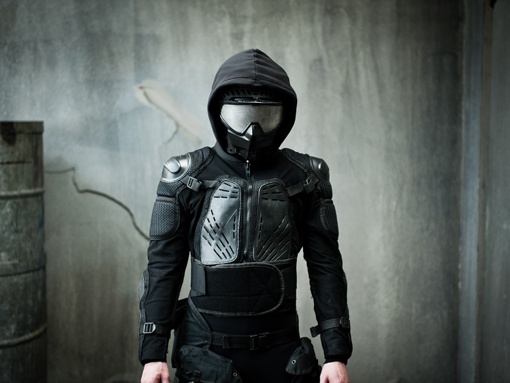
Furthermore, the mask the protagonist dons bears similarity to Richard's gas mask in "Dead Man's Shoes" and therefore provides a loose intertextual reference to the character. "Dead Man's Shoes" is about a soldier returning to his hometown in order to get revenge on the bullies who drove his mentally challenged brother to suicide. Moreover, Richard wears his gas mask in the film in order to frighten the bullies of his brother, haunting them as he begins to pick each one off, one by one. In contrast, the use of the similar gas mask in "Lesson No. 7" could be an illustration of how when used to taunt the youths of todays society, it is an ineffective method; as if to say that some anti-socially behaved youths today have evolved to a point that they are no longer as fearful or lack true empathy.


The character of Simon or "Superhoodie", in "Misfits".
Moving on, another TV series that was also filmed on Thamesmead estate is "Misfits", a drama involving young adults in a community service programme being struck by a storm and gaining powers; this seems to be an intertextually referenced by "Lesson No. 7" not only through location, but themes and character as well. For example, "Misfits" features a character named Simon, of whom, creates an alternative persona who wants to be a hero; he wears a black hoody and mask, trying to save the day but not always to his success. These character attributes and costume are very similar to that of the protagonist's in "Lesson No. 7"; he wants to save the day and make society right, but it's a losing battle.

Still from "Stress" (top), influenced
still from "Lesson No. 7" (below).
In terms of making intertextual reference to other music videos, "Lesson No. 7" evidently takes a lot of influence from French music video "Stress" by Justice, directed by Romain Gavras. For example, the cinematography and editing during scenes of violence and destruction is very similarly compose i.e. shaky camera movement, jump cuts and cold colour; as well as, some shot's being homaged. Moreover, "Stress" focuses on gang violence throughout the music video, portraying young males causing havoc and destruction within the council estate and amongst the wider community. On the other hand, "Lesson No. 7" focuses on what would happen is someone tried to teach these gangs a lesson using the same multitude of violence and destruction that they, themselves cause.


Consequently, the above indicates how "Lesson No. 7" links closely to Goodwin's theory with a wide variety of characteristics fitting in with his points about music video analysis. Additionally, "Lesson No. 7" is rich with intertextuality, again presenting it with an even stronger link to Goodwin. However, there are a few parts that don't link to this music video, such as voyeuristic treatment of the female body and demands for close-ups of the artists by the record label.